sexta-feira, 4 de janeiro de 2019

Start the New Year off right: Resolution to exercise can lead to a better you

Mirror photo by Patt Keith Dustin Yoder, right, wellness center coordinator at Blair Regional YMCA in Hollidaysburg, talks to Fauzia Aslam of Altoona about her routine as she works out on the treadmill.

As the over-indulgences of December reach a crescendo, a New Year beckons pristinely like a sparkling, undisturbed, snow-covered mountain — 364 days of hope and promise untarnished by regret. For many, January signals an ideal time to eat healthier and exercise.

Alison McMullen 43, of Claysburg started training Dec. 28, 2017. A New Year's resolution to reduce stress overload and muscle pain. She trains with three other women 20 years older than herself.

"They push me to do more," McMullen said. "I look at them and think 'if they can do it, so can I.' This is the best thing I've ever done for me. I have so much more energy, feel less stressed and my mind is so much clearer."

She's also lost 20 pounds, but what she is most thrilled about is she's lost those aches and pains, especially those in her neck and shoulders — a consequence of working with her hands and arms as a hair stylist.

"The gyms get super busy in January and February," personal trainer Celeste Bohn of Altoona said. "By March they are a little less crowded and by April nearly empty."

In reality, the best day for a fresh start is today — now.

"Getting started is the biggest challenge," Bohn, owner of Love, Sweat-n-Fitness in Altoona (2900 Beale Ave.), said. "Many people make a New Year's resolution to exercise but the accountability isn't there. I'm the same as them. I work all day, have dinner to get for my family and other responsibilities and it's easy to make excuses not to exercise."

What helps her and others make healthful changes stick for life is to reframe the challenge — view healthy eating habits and exercise as an investment in oneself.

Fauzia Aslam, 39, of Altoona joined the Blair Regional YMCA in January 2018 after her family moved to the area.

"It's me time. I enjoy working out," she said. She joined the Y's TRX training class upon a friend's recommendation and has been going for three months.

"It's awesome. I love it because at the end I have body aches. It's a sweet ache to me because it proves to me that I did something," Aslam said.

Dustin Yoder, wellness coordinator at the Blair Regional YMCA in Hollidaysburg, calls Aslam "a fantastic success story. She has shown such diligence in learning (TRX). It's exciting to see someone stick to (fitness) and be so successful."

Yoder and Bohn said they push themselves to continually work out. Yoder finds his motivation in being a positive example for his clients.

"If I didn't work here I can see how I'd let other things get in the way and I'd stop," he said. "If you don't (exercise) you are going to suffer a lot."

Bohn boosts her workouts by taking group classes with other instructors.

"People think nothing of spending money on a new name brand purse or expensive shoes," she said, "but they often don't want to spend money — make an investment — in their health. It's making yourself a priority and to do it."

She suggests people make a firm commitment to exercise for at least 30 days.

"Once people get started exercising, they feel the benefits immediately. Exercise releases all these feel-good brain chemicals and they sleep better and feel better. It's a natural mood booster. Nothing makes you feel any better than a good workout. The benefits last for hours," Bohn said. "Even when I'm exercising, I think in my head about all the other things I should be getting done. But afterward I feel so much better and I still get everything done — and I feel better doing it."

Yoder agrees.

"I have a lot of my clients call exercise their 'happy time,'" he said. "Taking the time to workout is not selfish. It's quite the opposite. With exercise you find you have a lot more patience with people. You have to make a greater investment in yourself."

Too often, the resolve to stick with a New Year's resolution to exercise fades, Yoder has found, and it's something he has thought about a lot.

"Too often they start at a very high exercise intensity and have very skewed expectations because of what they see on TV," he said. Exercising at too high an intensity leads to burnout, illness and, possibly, injury. Another downfall is boredom. Varying exercise routines helps alleviate fitness boredom but he's also discovered another road block to fitness commitment: Burnout and injury from exercising too hard.

"Variety is key," Yoder said. "I don't want to be bored and I don't want my clients to be either. They come and jog on the treadmill and do the same thing every time."

To counteract burnout and boredom, Yoder plans to start a new program in January designed to teach individuals how to exercise at the proper intensity using real-time heart rate monitoring.

"It's all about periodizing your exercise," Yoder said. "So for the first month or two, I teach people what is an appropriate exercise intensity for them. My first goal is to build aerobic capacity and then increase intensity from there."

Group classes can also boost exercise sustainability.

"I am all about building relationships. It helps people be accountable. I try to build connectivity among people," Yoder said, explaining how if a member misses a class the others ask about him or her. Finding the "trigger" that keeps people exercising is unique to each person.

An individual measures exercise success differently. For some, success is measured by pounds lost, mastery of a new fitness activity, or exercising five days a week without missing.

"The satisfaction that comes from accomplishment, that's a powerful tool," Yoder said.

Bohn, 41, discovered exercise's benefits 13 years ago.

"Exercise got me to where I am today. It really helped me jump over many hurdles and improve my life. Exercise gave me a gift and now I'm able to give it back," Bohn said. "This is a judgment free zone. I've been in their shoes."

Athletic all his life, Morley Cohn, 80, of Altoona, has been seeing a personal trainer for 15 years.

"It's an added level of discipline," Cohn explained. "When you have an appointment and you know someone is waiting for you it helps. I find it very motivating."

Altoona resident Louise Lobre-Riley said, "I know how important exercise is to my overall health (she's a two-time cancer survivor) so (my health) keeps me motivated to exercise. That, and Celeste (Bohn) is an awesome person and motivator. She pushes me to my limit. If I was at the gym by myself, I'd spend a lot more time talking."

McMullen expressed similar thoughts: "When I worked out by myself I didn't push myself to the extent Celeste does. She knows what your are capable of and pushes you to that extent. I'm proud of myself when I'm done."

Staff writer Patt Keith is at 949-7030.

Coming Thursday: Pilates strengthens the core.

quinta-feira, 3 de janeiro de 2019

How to kick start a healthy lifestyle in the new year

As we ring in 2019, many people are beginning their New Year resolutions like getting in shape.

That includes Cuauhtemoc Sodi, a gym member at Freedom Fitness.

"I came here to start doing exercise after a long time of not doing anything," said Sodi.

KRIS 6 spoke to Allison Lozano, a local fitness director at Freedom Fitness, about how people like Sodi and others can stay healthy in the new year.

Lozano has some good advice for all the new faces she'll be seeing at the gym.

She says first, it's important for people to set short term goals for themselves. This also prevents injury.

"Set realistic goals," said Lozano. "Don't make drastic changes that you can't stick with forever."

Lozano says the hardest part is getting to the gym. But once you're there, she says it's also important to change up your workout routine regularly.

"Because usually what works in the first week or two may get you a little wait loss or a boost of energy," said Lozano.

Or you can even try working out with a partner.

Gym members like Sodi also say staff do their part to help meet their goals by making sure everyone feels welcome, and not intimidated.

"They have a lot of patience with me and well I feel very comfortable," said Sodi.

Lozano also adds, if you're unsure how to use exercise equipment or maintain a healthy lifestyle, do not be afraid to ask for help.

"We never discourage anybody for coming to the gym period," said Lozano. "If you're here, I'm already proud of you."

Lastly, a reminder that some exercise is better than none at all.

Some tips on how you can stay committed to that fitness New Year's resolution

SACRAMENTO, Calif. — With the new year comes New Year's resolutions. 

One of the more popular resolutions people make is maintaining good health. However, it can sometimes be challenging to stay loyal to that goal. Randy Cowen, director at a Sacramento Crunch Fitness, knows all about that popular resolution.

"Start with the small things...those little baby steps lead to bigger steps and bigger steps. And really, that's the journey," Cowen said.

Cowen also noted bad choices are usually the easy choices, so if someone makes a goal to lose weight or be healthier, they have to make the difficult choices in order to keep their resolution. 

RELATED: 6-year-old girl wounded by celebratory gunfire on New Year's Eve

"Taking the stairs instead of the elevator. Eating [a] protein bar rather than a candy bar. Drinking a water instead of a soda. It doesn't take very long to build bad habits, but unfortunately it takes very long to break them," Cowen explained.

A lot of people search for a new gym in the new year, but that can be a tough decision with so many gyms to choose from.

"Do your research and take the tour. Cheapest is not always the best. Find out what you like to do, and if that gym offers that at an affordable price. Then I think you should do that," Cowen said. "It doesn't matter what gym you chose, it doesn't matter where you go, just make those small choices and you'll be on the path to where you're going."

Continue the conversation with Kevin on Facebook.

________________________________________________________________

WATCH MORE: Watch the fireworks show at the 2nd Annual New Year's Eve Sky Spectacular from Old Sacramento.

quarta-feira, 2 de janeiro de 2019

This home gym might actually get you to stop making excuses and start exercising

Just to let you know, if you buy something featured here, Mashable might earn an affiliate commission.

Image: BodyBoss

By TEAM COMMERCEMashable Deals2018-10-25 09:00:00 UTC

Unless you're a multi-triathlete or SoulCycle instructor, chances are you could stand to exercise more. Working out isn't all about getting (or staying) in shape: Regular exercise can improve memory, reduce your risk of chronic diseases, and make you a happier, more energetic person. 

We all know how good exercise can be, so why do we make a ton of silly excuses to avoid it at all costs? 

"I'm tired.""I'm too busy.""My left thumb is killing me.""The gym is too far."

Sound familiar?

Working out at home could be one way to counteract these common excuses, and something like the BodyBoss 2.0 Portable Home Gym could be a great place to start. (Plus it's not that expensive, and you'll have it whenever you need it.)

Whenever we think of home gyms, we think of having rooms dedicated to treadmills, stationary bikes, and other equipment that takes up a ton of space. But Body Boss's iteration is different. Made up of a sturdy, non-slip board, an exercise bar, and two resistance bands, this innovative kit can slip under your bed when idle, making it great for small apartments and tiny homes alike. 

So how much can do you with a mat and exercise bar? A lot, apparently. BodyBoss claims this small kit can perform over 300 different exercises, including squats, lunges, and bicep curls. Ready to kick things up a notch? You can add more resistance bands to your exercise bars to increase the difficulty. 

Normally, the BodyBoss home gym is valued at $179, but you can currently slash $30 off that price and save an extra 15% off with coupon code BOO15. It's likely a lot less than that monthly gym membership you never use. 

sábado, 29 de dezembro de 2018

Workout Wednesday: Why it's never too late to start exercising

Whether you're young or old, it's never too late to start exercising.

Our local fitness expert Rhonda Muprhy explains all the benefits that come with staying active and maintaining a healthy lifestyle.

If you were physically active at an early age that's great. However, if you didn't exercise regularly, it's never too late to start.Fitness may help with joint pain and stiff muscles. Exercise also lowers your risk of developing diabetes, heart disease and osteoporosis.It also helps control weight and melts belly fat. The effects of exercise are so potent that it influences every physiological system in the body for the better.

A healthy lifestyle can help keep you young in body and spirit.

(Copyright ©2018 KFSN-TV. All Rights Reserved.)

sexta-feira, 28 de dezembro de 2018

How to Set Yourself Up for Fitness Success in the New Year

The AskMen Acquire team thoroughly researches & reviews the best gear, services and staples for life.

After a holiday season full of indulgence, you are particularly motivated (or guilty) to start a healthy lifestyle.

Regardless of all that enthusiasm, most New Year's resolutions fall off by mid-February.

The statistics are grim.

So how can you change your success rate this year? This article will give you a simple blueprint to follow.

Start With Habits

You should play the long game and use the minimum effective dose of dieting and exercise to lose weight.

If the extent of your exercise plan to end the year involved frequent trips between the fridge and the couch, adopting The Rock's routine is not a good idea.

Instead, resolve to get in a 10-minute walk before bed.

The reason minor changes work is that they provide small wins that build momentum.

Focus on one area of change at a time.

If you focus on just one new habit at a time, they'll become second nature.

"Stop trying to be perfect because you're not going to avoid failure," says fitness coach BJ Ward of Born Fitness. "You're changing habits you've had for years and you will fail from time to time.

"And you know what? That's OK. Screw perfection. So many people quit because the moment they screw up they think 'I ruined it!' but that's far from the truth," Ward adds.

"You don't have to be perfect, but you do have to consistently pick yourself back up and get back to it. The only way you fail is if you abandon the plan."

To that point, make your good habits easy to achieve and put barriers in front of your bad habits.

For example, if working out first thing in the morning is your plan, have your gym clothes laid out and put them on first thing.

On the opposite end of the spectrum, make it harder to indulge in night-time snacking by keeping the pantry bare of junk food or hide the ice cream away in the garage, not the kitchen.

RELATED: Tricks To Improve Workout Motivation

Find the Best Diet for You, Not Mark

Everyone seems to have a diet team these days. Keto. Paleo. Vegan. Carnivore. You set up in one camp and then hate on everyone else. 2018 was the year of the keto diet. In a perfect world, 2019 will be the year of "Your Diet."

It's not sexy, but this is about discovering and learning your own metabolism and finding the approach that suits you best — not Mark at the office.

There's a reason no one study has conclusively found the perfect diet.

Every BODY is different.

It'd be great if we all worked like a calculator and X calories = Y weight loss, but we don't.

If you've been told to eat carbs, but feel achy and miserable after a slice of bread, that tells you something. Maybe low carb is a viable option.

The only rule is finding the approach you can get results from without hating your life while on it. A coach can help you navigate the process if you don't want to do the heavy thinking yourself, but it's worth testing and assessing how you respond to diets before closing yourself off to other options.

Quick Hiit Workouts

Last I checked, none of us are getting any less busy.

A lack of time is one of the most common obstacles I hear from busy adults looking to drop weight and get in shape.

Before I had kids, I'd have said it was a poor excuse. Now? Oh, believe me, I get it. So, how do you get the benefits of exercise without living in the gym?

It starts with one acronym that rhymes with a funny word: HIIT.

That's High-Intensity Interval Training.

You've probably heard of HIIT around the water cooler. But you assumed it was for athletes, right? After all, it has the word intensity in it.

Gulp.

Well, not so fast. A new approach to HIIT makes it manageable for anyone.

The typical rest-to-work ratios are max effort sprints of 15-30 seconds, followed by a short recovery period of maybe a minute. (Basically, a 1:2 work to rest ratio). Intense, to put it mildly.

But new research suggests intervals of one to three minutes at closer to 70-80 percent of max effort, followed by up to five minutes of lower intensity exercise to recover, led to significant weight loss in non-athletes (i.e. the average person!).

Here are a couple simple ways to implement this approach:

Tabata Circuits

Ditch the treadmill and use your own body in the comfort of your own living room. Each exercise is done for 20 seconds with 10-seconds rest in between. If you're fairly new to HIIT, extend the rest period to equal or double the work set duration (I.E. 20 seconds work followed by 40 seconds rest). This style of training was shown to be equally effective as traditional HIIT sprint workouts.

Here's a starting Tabata circuit you can try:

  • Jogging in place
  • Squats
  • Plank
  • Push-ups
  • Note: There's no need to duplicate the exact exercises used here. Full body exercises of any kind should substitute just fine. Incorporate weights for an additional challenge.

    Bike Sprints

    Using a stationary bike, you can go the traditional route of max effort sprints of 20-30 seconds, followed by a recovery period of one minute. However, to start with, go at a hard but manageable pace you can sustain for one to three minutes, followed by a slow-paced recovery period of three to five minutes. Repeat this pattern for 10 to 20 minutes.

    Can't be bothered to get to the gym? Stream spin classes at home with the Flywheel:

    Flywheel at-home bike

    If you dream of the days of spin classes on a Flywheel Sports' at-home bike — no more schlepping across town or waiting in line to shower — check out this stationary bike that brings the classes to you.From $1,699.00 at FlywheelSports.com

    RELATED: Four Ways To Hack Your Fitness

    Get Some Accountability

    You say you want to get in better shape. But when it comes time to execute, we humans tend to sabotage ourselves.

    When you are the only person in the fight, it's easy to procrastinate, pass on a salad for sushi, and ditch the gym again and again.

    You can use wearable technology to set you up with targets and reminders if you're the analytical type who needs a push to get going. (Wearable technology will be 2019's undisputed fitness trend, according to a new report by the American College of Sports Medicine.)

    Apple Watch Series 3

    Stay connected in style. Designed for users looking for the next generation of connectivity, Apple Watch Series 3 moves your iPhone's apps and functions to your wrist, so you can do more while leaving your phone in your pocket.$284.03 at Amazon.com

    That said, you tend to gain the most progress from relationships with other human beings. When you off-load some accountability to a person with your best interests in mind, someone who checks in on your progress and calls you out on your BS, success follows suit.

    Most fail simply because they haven't attached enough commitment to the goals they set on Jan. 1 and reinforced them with accountability.

    Whether you need to hire a coach or find a workout buddy with the same motivations, this is often the missing ingredient between success and failure.

    Mitch Calvert is a body transformation coach for men. He discovered his spark for fitness while slaving away as a 240lb line cook 13 years ago — and now works specifically with men like his former self who have weight to lose and confidence to gain. Get Mitch's handy two-page "Mansformation Cheat Sheet" to simplify your diet and drop stubborn fat.

    You Might Also Dig

    AskMen may receive a portion of revenue if you click a link in this article and buy a product or service. The links are independently placed by our Commerce team and do not influence editorial content. To find out more, please read our complete terms of use.

    terça-feira, 25 de dezembro de 2018

    Exercise is medicine, and doctors are starting to prescribe it

    There is a movement afoot (pun intended) to get more people exercising by involving their family doctors.

    In the United Kingdom, the government recently released Moving Medicine — an online resource to help doctors talk to their patients about the importance of exercise in relation to conditions as diverse as cancer and dementia. This is a welcome initiative given that physical inactivity is the fourth leading cause of death in the world, according to the World Health Organization.

    The benefits of exercise have been proven over and over again: Exercise reduces risk of depression, type 2 diabetes, heart disease, stroke and many cancers, and prevents early death.

    If it was a pill, exercise would be a trillion-dollar money-maker prescribed to everyone.

    Exercise as a therapy is mentioned in almost all prevention and treatment guidelines, which are written by doctors themselves. Still, most patients never hear their doctor talk about it. And fewer than one in four Canadians meet current guidelines for physical activity, which recommend that people participate in moderate (such as brisk walking) and vigorous (such as jogging, swimming or running) activity for at least 150 minutes per week.

    Part of the reason is that most doctors in practice today received little, if any, training on the role of exercise in managing disease. Years ago I taught a 30-minute lecture on the topic at a Canadian medical school and this was all the students got over their four-year program.

    This is about to change.

    Free gym prescriptions

    In recent years, Canadian medical schools — such as the Cumming School of Medicine at the University of Calgary — have revised their curricula to incorporate aspects of exercise in the prevention and treatment of disease.

    This is one part of growing initiatives like Exercise is Medicine that advocate for the role of exercise and encourage doctors to prescribe it.

    Similarly, the Prescription to Get Active program in Alberta allows doctors to prescribe free 30-day gym memberships to patients.

    Doctors who exercise themselves are more likely to recommend exercise to their patients. (Shutterstock)
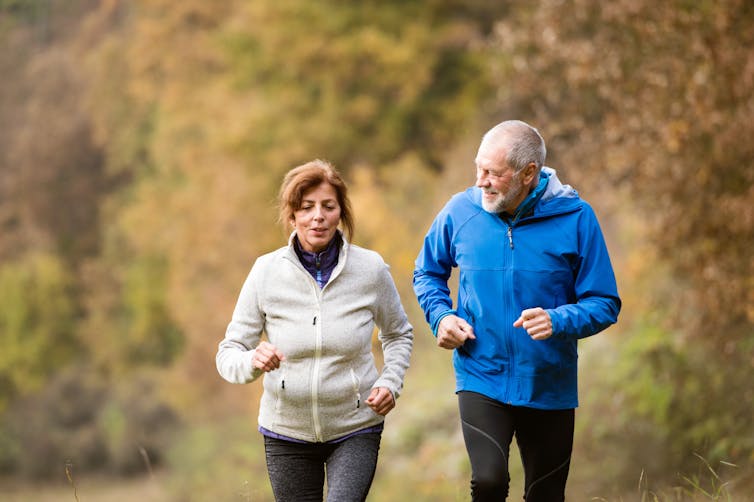
    A grassroots program called Walk with a Doc has local doctors walking with their patients. The program was begun by Dr. David Sabgir, a cardiologist in Columbus, Ohio, who was frustrated with his inability to affect behaviour change in the clinical setting and invited his patients to go for a walk with him in a local park one Saturday morning. More than 100 people showed up, and there are now 400 chapters worldwide.

    There have also been calls for exercise to be considered a vital sign, much like blood pressure and heart rate. Health insurance provider Kaiser Permanente requires doctors in the United States to record how much physical activity a patient does.

    Patients who receive exercise prescriptions and counselling from their doctors are more likely to be active, so these initiatives are a good start.

    More needs to be done, however, when only one-third of doctors talk to their patients about exercise.

    Reactionary health-care system

    Not surprisingly, doctors who exercise themselves are more likely to counsel their patients about physical activity. Therefore, targeting doctors to be more active may provide a substantial population effect.

    At the same time, doctors say they need more and better training with respect to the benefits of exercise and how to counsel patients.

    Exercise is an effective medicine for many patients dealing with heart disease, dementia, depression, stroke and cancer. (Shutterstock)

    The need for this change in approaching health and disease comes from two key realizations. One is that there are a growing number of people with preventable chronic illness, and our health-care system is not adequately prepared to deal with all these patients.

    Our system is reactionary; it is designed to wait until someone has a disease instead of preventing it. But chronic illnesses are not like diseases of old. They cannot be cured, although many can be prevented. Exercise is increasingly recognized as important to this change.

    Exercise for cancer care

    Second, we have greater knowledge about the benefits of exercise in treating disease in addition to preventing it. Exercise is used for cardiac rehabilitation, after a heart attack.

    Exercise works as well as drugs that lower cholesterol and blood pressure in preventing early death. And diabetics who exercise require less medication to manage their blood sugar.

    Even in treating cancer, exercise can reduce the side-effects of treatment, such as anxiety, depression and fatigue. This has prompted the Clinical Oncology Society of Australia to release a position statement recommending exercise as part of regular cancer care. It is believed to be the first of its kind in the world, but hopefully not the last.

    Doctors would benefit from additional incentives such as specific billing codes that allow for prescribing of exercise as well as more continuing medical education sessions on how to do so.

    Educating current and future doctors that exercise is as good, if not better, than many medications will be essential to prevent the increasing burden of chronic illnesses.

    Scott Lear writes the weekly blog Feel healthy with Dr. Scott Lear.