terça-feira, 28 de maio de 2019

Here's How to Get Your 10,000 Steps, Straight From Fitness Experts Who Do It Every Day

a woman standing in front of a building: Here's How to Get Your 10,000 Steps, Straight From Fitness Experts Who Do It Every Day © Getty / filadendron Here's How to Get Your 10,000 Steps, Straight From Fitness Experts Who Do It Every Day

There are so many reasons to get more steps: walking can improve your mood, keep you healthy, and even help you lose weight. Experts recommend getting 10,000 steps each day, which can seem daunting. But you'll find that it's really gratifying once you start to see that step count tick upward on your smart watch or fitness tracker. If you're struggling to find ways to make it happen, try these tips from fitness pros:

Shop locally. "If your neighborhood has a corner store or grocery store within walking distance, try to hit that up sometimes," Kat Wiersum, interval instructor at Studio Three in Chicago, told POPSUGAR. "It's definitely tempting to drive to the nearest big box store, but you'll utilize your neighborhood resources (potentially local small businesses!) and get those steps in."

Park further away. Wherever you're headed, whether to the store or work, "park at the end of the lot," said NCCPT-certified personal trainer Katie Dunlop, owner of Love Sweat Fitness. "Those few extra feet can add up fast."

Take the stairs, instead of the elevator. "Stairs not only get you extra steps, but if you sit at a desk most of the day, they can also help you keep your glutes activated throughout the day and avoid dead butt," Katie told POPSUGAR.

Walk while you're waiting. "Whether you're waiting for a friend, a date, or your doctor, there are always a few extra minutes. Instead of sitting down to wait, move it," Katie said.

Stay active during lunch, instead of eating at your desk. "Whether you have 30 minutes or a full hour, if you commit to a 15-minute walk each day, you'll be more likely to pack a healthy lunch to ensure you have the time to get in a little energizing calorie burn," Katie explained. Plus, it will allow you to disconnect and refresh before jumping back into work for the day.

Take minibreaks throughout the day. "Schedule the last two minutes of each hour as your 'hourly stretch.' Get up and walk around to get your steps in, plus your blood circulating and body moving regularly," Katie said.

Miss your stop - on purpose. "If you take public transit, get off one or two stops earlier than your usual stop," Kat suggested. "This can help you discover neighborhood gems that you may have missed, make you more comfortable navigating to your destination, and give you tons of extra steps." She added, "I just did this and found a great new coffee joint I'd been missing."

Be strategic at the grocery store. "When you're grocery shopping, if you have time, try to slow down and take an extra lap down another aisle. I try to shop the entire perimeter of the store first and then the middle aisles," Kat said. "If the line is huge, I'll take an extra lap around rather than just stand there waiting. Half the time, the line is down by the time my lap is done."

Do reverse lunges while you cook. "Instead of just standing around waiting for the water to boil, try adding in three to four sets of 20 alternating reverse lunges. It's a great way to lift and tone your booty, strengthen your hamstrings, and get in your steps," Katie told POPSUGAR. She added that you might also try marching in place.

Stay busy by walking around your home. Kat often sets a timer for five to 10 minutes and commits to doing tasks around the house until it expires. "This is also a great time to call your mom or best friend and stay standing or walking around during the call," she said.

(VIDEO) Why does my workout cause weight gain? (Provided by Shape) 

Click to expand

UP NEXT

  • Sarah Hyland opens up about her health and fluctuating weight

    <p>Sarah Hyland opens up about her health and fluctuating weight</p>

  • She broke up with a cheater — and then lost almost half her size

    <p>Kristen McLaughlin and her then-boyfriend would order "giant pizzas" to go along with their drinks. Kristen says their breakup was the "best thing" that could have happened to her.</p>

  • Study shows credit and debit cards are the dirtiest payment methods

    A new study from LendEDU.com showed debit and credit cards were dirtier on average than cash or coins.&nbsp;

  • UP NEXT

    UP NEXT

    segunda-feira, 20 de maio de 2019

    Here's How Often You'd Need to Walk to Start Burning Belly Fat, According to a Trainer

    Rearview shot of an unrecognizable young sportswoman's running shoes outside

    Walking is a simple, effective way to start losing weight, but if you want to see results, you'll need to get your steps in every single day and pair them with a clean, healthy diet. That's true for shedding any unwanted pounds in your midsection, too, since those inches will come off naturally when you begin losing fat all over. "Proper eating will help you reduce belly fat, while exercise can help you keep it off," Steven McDaniels, an NASM-certified personal trainer and director of fitness and recreation at Beacon College in Leesburg, FL, told POPSUGAR.

    Steven recommends walking an hour each day, or splitting that time into two 30-minute sessions, if that better fits your schedule. Just how quickly you'll see results depends on a number of factors, including your weight and the intensity of your workout. For example, here's how many calories a 145-pound woman would burn, based on her fitness level:

  • Beginner: Walking at 2 to 2.5 miles per hour (a slow, conversational pace) for 60 minutes a day would burn approximately 200 calories.
  • Intermediate: Walking at 3.5 miles per hour (a brisk pace) for 60 minutes a day would burn approximately 250 to 300 calories.
  • Advanced: Walking at 4.5 miles per hour (a fast speed walk) for 60 minutes a day would burn approximately 350 calories.
  • Steven explained that, since one pound of fat is equal to 3,500 calories, it would take roughly two weeks for someone in that advanced category to burn enough calories to begin losing weight. (For the others, it would be a bit longer.) Of course, anything else you can do to help create a calorie deficit — like watching your portions — will speed up that timeline.

    To maximize your walking workout, Steven recommends adding strength training to your routine. "This will increase overall fat loss, which in turn can have an effect on belly fat," he said. You can also focus on abdominal exercises to help tone and tighten your core as you lose fat.

    The Most Common Ab Exercise People Do Wrong and How to Do It Right, According to a Trainer

    A strong core is essential for not just most workouts, but also posture, balance, and lower-back health. To strengthen those muscles, we're big fans of ab workouts whether they're bodyweight, use fun equipment like sliders, or bring all the heat with dumbbells. But as much as we encourage people to work their ab muscles, they may not be getting the most out of the exercise if they don't have proper form. NASM-certified personal trainer Guychard Codio, cofounder of New York City Personal Training, told POPSUGAR that, if he could choose just one ab exercise that his clients tend to do wrong, it's the bicycle crunch.

    Bicycles are a move that a lot of people do, he said, but they don't know how to rotate to fully engage their obliques and deep abs known as the transverse abdominis or TVA. To help clients learn how to properly engage their core, he has them do planks and side planks. "Learning where your muscles are and how they feel and how to engage them is key before you do some ab exercises," Guychard explained, adding that if you don't learn how to engage your abs, you'll be using other muscles to compensate, and this can also lead to lower back pain.

    Ultimately, people don't use their entire torso and core to twist during bicycles; they just go through the motions with their elbows and use their head and neck instead. Ahead, check out Guychard's tips for how to properly do a bicycle crunch — and get to crunchin' the right way (if you're doing it wrong)!

    sábado, 18 de maio de 2019

    Health Check: how to start exercising if you’re out of shape

    Perhaps your GP has recommended you exercise more, or you've had a recent health scare. Maybe your family's been nagging you to get off the couch or you've decided yourself that it's time to lose some weight.

    How do you find the motivation, time and resources to get fit, particularly if you haven't exercised in a while? How do you choose the best type of exercise? And do you need a health check before you start?

    Read more: Health Check: how much physical activity is enough in older age?

    Overcoming barriers to exercise

    Motivation

    Understanding the effect a sedentary lifestyle has on your health often hits home only after a serious event such as hearing bad news from your doctor. For some people, that's often enough motivation to get started.

    Surviving a serious illness as a result of an inactive lifestyle, such as a heart attack or stroke, can also be frightening enough to provide a great deal of motivation.

    So, if you have not exercised for several years or haven't exercised before, a it's a good idea to get a health check with your GP before starting.

    Then you need to keep motivated enough to stick with your exercise program. You can track your training or fitness level and set some achievable goals to keep going.

    Lack of time

    Finding the time and effort to fit exercise into your daily routine is challenging. We know being "time poor" is a common reason for not exercising. And many people such as office workers, vehicle or machine operators have low activity levels at work and don't feel like exercising after a long day.

    Read more: Time scarcity is a slippery slope to inactivity

    One way to get around these barriers might be to attend a group exercise session or join a sports club. If you find exercise boring, you can encourage a friend to join you or join an exercise group to make it enjoyable. If you played sport in your youth, that might provide an option.

    Having a friend to exercise with or team mates to support you gives a sense of commitment so that you have to be there and will be challenged if you fail to show up.

    Resources

    You don't need to join a gym with a lot of fancy equipment to get fit. There are many YouTube videos of safe routines that you can follow and adjust as you get fitter.

    This one demonstrates a 15 minute cardio exercise routine that you can do at home.

    You don't need any special equipment to exercise at home along with this 15 minute cardio workout for beginners.

    Many exercises – including squats, push ups and sit ups – don't need special equipment. And rather than improving muscle strength with weights at the gym, you can fill milk bottles with water instead.

    Yes, you'll huff and puff. But it gets easier

    You might be thinking about starting aerobic exercise like the cardio workout above, or walking, jogging, swimming or cycling. All need oxygen to provide energy over several minutes or longer.

    When we perform aerobic exercise, our heart rate increases along with our breathing rate and depth. This is because this type of exercise requires oxygen to provide energy to keep going.

    Read more: Health Check: what should our maximum heart rate be during exercise?

    When we are not used to this type of exercise our body is inefficient at using the oxygen we breathe to generate energy for our skeletal muscles. That's why when we start an exercise program we huff and puff more, get tired quickly and may not finish the exercise.

    But if we keep exercising regularly, our bodies become more efficient at using oxygen and we become better at generating enough energy for our muscles to work.

    Over weeks of regular exercise, the number and efficiency of our body's mini-powerhouses – mitochondria – increase in each cell. This increases the energy they can supply to the muscles, exercising becomes easier and we recover faster from each session.

    Read more: Explainer: what are mitochondria and how did we come to have them?

    That's why it's important to continue and repeat exercise sessions, even after a shaky start or a few set-backs. Yes, it can be a big challenge, but aerobic exercise gets easier over time as the body gets used to providing the energy it needs.

    Thinking of yoga or simple stretches? Here's what to expect

    Yoga is a great way to start an exercise program and you can perform it at various levels of intensity. Stretching and other moves improve flexibility and strength. Yoga also emphasises breathing and relaxation through meditation.

    Yoga, like other forms of exercise, will be challenging to begin with. But it does get easier over the weeks as your body adapts. So, it is important to be persistent and make the exercise part of your routine with at least three sessions of up to one hour every week.

    Read more: The yoga paradox: how yoga can cause pain and treat it

    At the start, you may get sore muscles. While this can be uncomfortable, the soreness goes away after about a week. You can reduce this soreness by starting with low intensity and building gradually over the first month.

    Once your muscles become used to the new movements, the soreness will be minimal as you progress.

    Read more: Health Check: why do my muscles ache the day after exercise?

    Watch your joints

    We know being overweight or obese has detrimental effects on the heart, bones, joints and other organs including the pancreas, which regulates blood glucose (sugar) levels. Obesity can also affect brain health and is linked to poor cognition.

    The good news is that regular exercise can help reduce these negative effects.

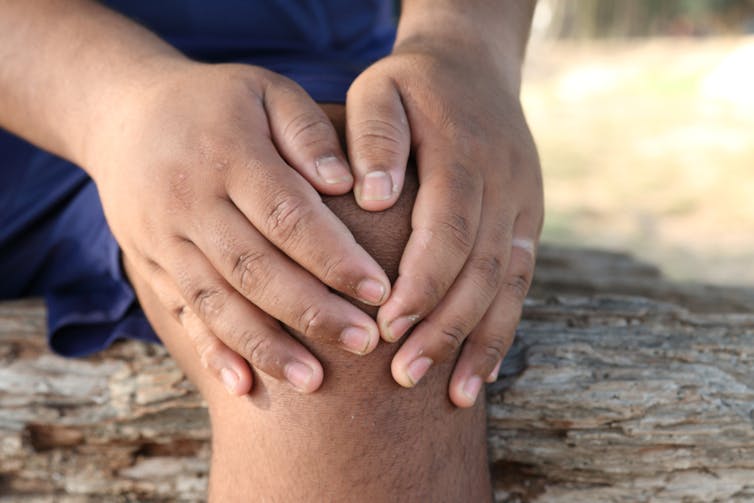
    To avoid pain to the knee and other joints, try gentle exercise or swimming before taking on anything more vigorous if you are obese or overweight. from www.shutterstock.com

    But if you are overweight or obese, taking up exercise can place great strain on your joints, particularly the articulating surface, the cartilage surface of bones that contact each other. So hips, knees and ankles can become inflamed and painful.

    So it may be best to include exercise that reduces weight bearing, such as exercise in water or using a stationary exercise bike or rowing machine. Once you've lost some weight and your cardiovascular function has improved, then you can add more walking or jogging to your exercise program.

    The right diet helps power you along

    A healthy diet you can maintain in the long term is a very important part of any fitness routine. Not only can it help you lose weight, it can also provide the right type of fuel to power your new exercise program.

    Read more: Health Check: what's the best diet for weight loss?

    Getting plenty of fibre from fruit, vegetables and whole grains will help to reduce weight and keep it off while exercising.

    Sugar, especially the type found in fizzy drinks and sweets, are low in nutrients and increase the risk of diabetes, metabolic syndrome and cardiovascular disease. So cut down on refined carbohydrates like some breads and rice, sugary cereals and refined pasta since these include sugars we are trying to avoid and have had their fibre removed. Replace them with oats, carrots or potatoes.

    It's best to avoid fad diets, which tend to be restrictive and difficult to maintain. They can lead to a yo-yo effect where you lose weight only for it to return.

    Read more: Food for fitness: is it better to eat before or after exercise?

    In a nutshell

    Once you've decided to start exercising, and had a medical check if needed, start slowly and build your exercise routine up over weeks and months. Make it interesting and enjoyable, perhaps by working out with a friend or group. Set some achievable goals, try to stick to them and don't give up if you have a set back.

    Weight loss and getting fit requires different approaches for different people so find what works for you and make it part of your lifestyle. Increase the intensity and frequency of your exercise gradually from a minimal three times a week for 20 minutes to longer, more intense sessions more often.

    quinta-feira, 16 de maio de 2019

    Health Check: how to start exercising if you’re out of shape

    Perhaps your GP has recommended you exercise more, or you've had a recent health scare. Maybe your family's been nagging you to get off the couch or you've decided yourself that it's time to lose some weight.

    How do you find the motivation, time and resources to get fit, particularly if you haven't exercised in a while? How do you choose the best type of exercise? And do you need a health check before you start?

    Read more: Health Check: how much physical activity is enough in older age?

    Overcoming barriers to exercise

    Motivation

    Understanding the effect a sedentary lifestyle has on your health often hits home only after a serious event such as hearing bad news from your doctor. For some people, that's often enough motivation to get started.

    Surviving a serious illness as a result of an inactive lifestyle, such as a heart attack or stroke, can also be frightening enough to provide a great deal of motivation.

    So, if you have not exercised for several years or haven't exercised before, a it's a good idea to get a health check with your GP before starting.

    Then you need to keep motivated enough to stick with your exercise program. You can track your training or fitness level and set some achievable goals to keep going.

    Lack of time

    Finding the time and effort to fit exercise into your daily routine is challenging. We know being "time poor" is a common reason for not exercising. And many people such as office workers, vehicle or machine operators have low activity levels at work and don't feel like exercising after a long day.

    Read more: Time scarcity is a slippery slope to inactivity

    One way to get around these barriers might be to attend a group exercise session or join a sports club. If you find exercise boring, you can encourage a friend to join you or join an exercise group to make it enjoyable. If you played sport in your youth, that might provide an option.

    Having a friend to exercise with or team mates to support you gives a sense of commitment so that you have to be there and will be challenged if you fail to show up.

    Resources

    You don't need to join a gym with a lot of fancy equipment to get fit. There are many YouTube videos of safe routines that you can follow and adjust as you get fitter.

    This one demonstrates a 15 minute cardio exercise routine that you can do at home.

    You don't need any special equipment to exercise at home along with this 15 minute cardio workout for beginners.

    Many exercises – including squats, push ups and sit ups – don't need special equipment. And rather than improving muscle strength with weights at the gym, you can fill milk bottles with water instead.

    Yes, you'll huff and puff. But it gets easier

    You might be thinking about starting aerobic exercise like the cardio workout above, or walking, jogging, swimming or cycling. All need oxygen to provide energy over several minutes or longer.

    When we perform aerobic exercise, our heart rate increases along with our breathing rate and depth. This is because this type of exercise requires oxygen to provide energy to keep going.

    Read more: Health Check: what should our maximum heart rate be during exercise?

    When we are not used to this type of exercise our body is inefficient at using the oxygen we breathe to generate energy for our skeletal muscles. That's why when we start an exercise program we huff and puff more, get tired quickly and may not finish the exercise.

    But if we keep exercising regularly, our bodies become more efficient at using oxygen and we become better at generating enough energy for our muscles to work.

    Over weeks of regular exercise, the number and efficiency of our body's mini-powerhouses – mitochondria – increase in each cell. This increases the energy they can supply to the muscles, exercising becomes easier and we recover faster from each session.

    Read more: Explainer: what are mitochondria and how did we come to have them?

    That's why it's important to continue and repeat exercise sessions, even after a shaky start or a few set-backs. Yes, it can be a big challenge, but aerobic exercise gets easier over time as the body gets used to providing the energy it needs.

    Thinking of yoga or simple stretches? Here's what to expect

    Yoga is a great way to start an exercise program and you can perform it at various levels of intensity. Stretching and other moves improve flexibility and strength. Yoga also emphasises breathing and relaxation through meditation.

    Yoga, like other forms of exercise, will be challenging to begin with. But it does get easier over the weeks as your body adapts. So, it is important to be persistent and make the exercise part of your routine with at least three sessions of up to one hour every week.

    Read more: The yoga paradox: how yoga can cause pain and treat it

    At the start, you may get sore muscles. While this can be uncomfortable, the soreness goes away after about a week. You can reduce this soreness by starting with low intensity and building gradually over the first month.

    Once your muscles become used to the new movements, the soreness will be minimal as you progress.

    Read more: Health Check: why do my muscles ache the day after exercise?

    Watch your joints

    We know being overweight or obese has detrimental effects on the heart, bones, joints and other organs including the pancreas, which regulates blood glucose (sugar) levels. Obesity can also affect brain health and is linked to poor cognition.

    The good news is that regular exercise can help reduce these negative effects.

    To avoid pain to the knee and other joints, try gentle exercise or swimming before taking on anything more vigorous if you are obese or overweight. from www.shutterstock.com

    But if you are overweight or obese, taking up exercise can place great strain on your joints, particularly the articulating surface, the cartilage surface of bones that contact each other. So hips, knees and ankles can become inflamed and painful.

    So it may be best to include exercise that reduces weight bearing, such as exercise in water or using a stationary exercise bike or rowing machine. Once you've lost some weight and your cardiovascular function has improved, then you can add more walking or jogging to your exercise program.

    The right diet helps power you along

    A healthy diet you can maintain in the long term is a very important part of any fitness routine. Not only can it help you lose weight, it can also provide the right type of fuel to power your new exercise program.

    Read more: Health Check: what's the best diet for weight loss?

    Getting plenty of fibre from fruit, vegetables and whole grains will help to reduce weight and keep it off while exercising.

    Sugar, especially the type found in fizzy drinks and sweets, are low in nutrients and increase the risk of diabetes, metabolic syndrome and cardiovascular disease. So cut down on refined carbohydrates like some breads and rice, sugary cereals and refined pasta since these include sugars we are trying to avoid and have had their fibre removed. Replace them with oats, carrots or potatoes.

    It's best to avoid fad diets, which tend to be restrictive and difficult to maintain. They can lead to a yo-yo effect where you lose weight only for it to return.

    Read more: Food for fitness: is it better to eat before or after exercise?

    In a nutshell

    Once you've decided to start exercising, and had a medical check if needed, start slowly and build your exercise routine up over weeks and months. Make it interesting and enjoyable, perhaps by working out with a friend or group. Set some achievable goals, try to stick to them and don't give up if you have a set back.

    Weight loss and getting fit requires different approaches for different people so find what works for you and make it part of your lifestyle. Increase the intensity and frequency of your exercise gradually from a minimal three times a week for 20 minutes to longer, more intense sessions more often.

    8 Strength Exercises All Beginners Should Learn How to Do

    If you're just starting an exercise routine for the first time, you're probably feeling a mix of emotions. It's always exciting to try something new, but it can also be equal parts confusing and daunting. But the thing is, when it comes to working out, the best place to start really is at the beginning, with simple and effective exercises that'll let you build a sturdy base you can use as a jumping off point as you get stronger and stronger.

    Trust me, I know it can be tempting to try and tackle a workout that you found online that seems challenging, or a circuit that your favorite trainer posted on Instagram. But if you're new to this whole exercise thing (welcome!), it really is absolutely essential that you start with the basics. And by the basics I mean classic exercises that let you practice the foundational movements upon which hundreds of other exercises are created. Most of these movement patterns are also functional, meaning they're movements you do in everyday life, not just in the gym.

    For example, the hip-hinge movement is one important movement pattern. It's the motion of bending forward from your hips (not your back), and pushing your butt behind you. You do this movement in a squat (and almost every squat variation) and any type of deadlift. Learning how to properly do the basic versions of these exercises is key if you want to safely build on them as you get stronger. If you skip over mastering basic exercises that teach you to do foundational movements properly, you'll be doing yourself (and your fitness goals) a disservice long term.

    Below are eight basic exercises that are great for many beginners to start with. Of course, exercise is not one size fits all, and you should absolutely speak with your doctor or another health-care professional you trust before starting a new exercise regimen, especially if you're unsure whether it's safe for you. And as you're working on these exercises, if you're having trouble maintaining proper form or feel any sort of pain (other than a little post-workout soreness a day or two after), stop and check in with a doctor or physical therapist. A base level of body control, stability, and mobility is needed for these exercises, so you may need to start by taking a closer look at those things.

    When you're first learning the following moves, use just your body weight. (There are two you'll need resistance bands for—more on that below.) Adding resistance in the form of free weights, like dumbbells or kettlebells, will make them more challenging and it's best to wait to do that until you've fully mastered each movement. You should be able to do 10 to 15 reps comfortably with great form before even thinking about adding weights, says Jacque Crockford, M.S., C.S.C.S., certified personal trainer and exercise physiology content manager at American Council on Exercise (ACE).

    1. Squat

    A squat is a classic exercise that shows up in tons of workouts. Learning a basic bodyweight squat will help you master the hip-hinge movement. It's a compound exercise, meaning it works more than one muscle group at once, including the glutes, quads, and core.

    a person standing posing for the camera: Stand with your feet slightly wider than hip-width apart, toes slightly turned out, arms resting by your sides with your palms facing in. This is the starting position. Engage your core and keep your chest lifted and back flat as you shift your weight into your heels, push your hips back, and bend your knees to lower down into a squat. Bend your elbows and bring your palms together in front of your chest. (You can also just hold your hands in front of your chest the entire time.) Drive through your heels to return to standing and squeeze your glutes at the top. That's 1 rep. Targets the gluteus maximus, quadriceps, hamstrings, and core. © Self
  • Stand with your feet slightly wider than hip-width apart, toes slightly turned out, arms resting by your sides with your palms facing in. This is the starting position.
  • Engage your core and keep your chest lifted and back flat as you shift your weight into your heels, push your hips back, and bend your knees to lower down into a squat. Bend your elbows and bring your palms together in front of your chest. (You can also just hold your hands in front of your chest the entire time.)
  • Drive through your heels to return to standing and squeeze your glutes at the top. That's 1 rep.
  • Targets the gluteus maximus, quadriceps, hamstrings, and core.

  • Stand with your feet slightly wider than hip-width apart, toes slightly turned out, arms at your sides, palms in.
  • Engage your core and keep your chest lifted and back flat as you shift your weight into your heels, push your hips back, and bend your knees to lower into a squat. Bend your elbows and bring your palms together in front of your chest. (You can also just hold your hands in front of your chest the entire time.)
  • Drive through your heels to stand and squeeze your glutes at the top for 1 rep.
  • 2. Romanian Deadlift

    The deadlift also trains the hip-hinge motion, but targets your hamstrings more than a squat does. It also works the glutes and core. You probably have usually seen deadlifts done with weights, but they can absolutely be done without them, Crockford says.

    a man posing for a picture © Katie Thompson
  • Stand with your feet hip-width apart, knees slightly bent, arms relaxed by the front of your quads. This is the starting position.
  • Hinge forward at your hips and bend your knees slightly as you push your butt way back. Keep your back flat and shoulders engaged as you slowly lower your arms along your shins toward the floor until you feel a stretch in your hamstrings.
  • Keeping your core tight, push through your heels to stand up straight and return to the starting position. Keep your arms close to your shins as you pull. Pause at the top and squeeze your butt. That's 1 rep.
  • If you're just starting to exercise, the Romanian deadlift (pictured here) is a great deadlift to start with. A traditional deadlift is done by fully bending the knees to lift the weight off the floor. The Romanian deadlift, which involves a slight bend in the knees but not a full knee bend, helps keep the focus on the hip-hinge movement. (A stiff-leg deadlift, where you don't bend your knees at all, requires a lot more flexibility to do properly so isn't the best to start with.)

    3. Reverse Lunge

    When you lunge, you're training your body's ability to do single-leg movements. Any lunge that has you transitioning from two feet to one foot and back again—like a forward lunge, reverse lunge, transverse lunge, or lateral lunge—fits the bill, says Crockford. By changing your base of support with each rep, you'll train your balance and stability more than doing exercises where your base of support stays firmly on both feet. You're also working your glutes, quads, and core.

    I chose a reverse lunge here because they are typically easier on the knees and easier to control than forward lunges. But if you feel more comfortable lunging forward and don't have any knee pain when you do, feel free to do that instead.

    a person posing for a picture: For this lunge, the same leg that went forward for the forward lunge now goes backwards, putting your hip into extension. “Ideally you should feel a stretch through the hamstring of the front leg” as you perform this exercise, says Conlon. Stand with your feet shoulder-width apart and your hands on your hips (as pictured) or hold them together in front of your chest. This is the starting position. Step back (about 2 feet) with your right foot, landing on the ball of your right foot and keeping your heel off the ground. Bend both knees to create two 90-degree angles with your legs. In this positioning, your chest should be upright and your torso should be leaning slightly forward so that your back is flat and not arched or rounded forward. Your right quad should be parallel to the floor and your right knee should be above your right foot. Your butt and core should be engaged. Push through the heel of your left foot to return to th   e starting position. That's 1 rep. Do all your reps on one side, then repeat with the other leg. You can also alternate legs if you’d prefer. © Self

    For this lunge, the same leg that went forward for the forward lunge now goes backwards, putting your hip into extension. "Ideally you should feel a stretch through the hamstring of the front leg" as you perform this exercise, says Conlon.

  • Stand with your feet shoulder-width apart and your hands on your hips (as pictured) or hold them together in front of your chest. This is the starting position.
  • Step back (about 2 feet) with your right foot, landing on the ball of your right foot and keeping your heel off the ground.
  • Bend both knees to create two 90-degree angles with your legs. In this positioning, your chest should be upright and your torso should be leaning slightly forward so that your back is flat and not arched or rounded forward. Your right quad should be parallel to the floor and your right knee should be above your right foot. Your butt and core should be engaged.
  • Push through the heel of your left foot to return to the starting position. That's 1 rep.
  • Do all your reps on one side, then repeat with the other leg. You can also alternate legs if you'd prefer.
  • Stand with your feet together with your arms by your sides (or pictured) or hands on your hips. This is the starting position.
  • Step back (about 2 feet) with your right foot, landing on the ball of your foot and keeping your heel off the floor.
  • Bend both knees until your left quad and right shin are parallel to the floor, your torso leaning slightly forward so your back is flat. Your left knee should be above your left foot and your butt and core should be engaged.
  • Push through the heel of your left foot to return to the starting position. This is 1 rep.
  • You can either alternate legs each time, or do all your reps on one side before switching to the other side.
  • 4. Bent-over row

    A row works the "pulling" movement pattern and specifically targets the muscles in the upper back. Unlike the other exercises here, you can't really do a pull exercise without some sort of equipment, whether it's dumbbells or a resistance band. Crockford recommends starting with a very light resistance band (you can simply stand on the other end) and thinking about keeping your shoulder blades back and down as you perform the rowing movement—your shoulders shouldn't be rounded forward or hunched up tensely by your ears.

    a person in a blue shirt: Stand with your feet hip-width apart, holding a weight in each hand with your arms at your sides. With your core engaged, hinge forward at the hips, push your butt back, and bend your knees slightly, so that your back is no lower than parallel to the floor. (Depending on your hamstring flexibility, you may not be able to bend so far over.) Gaze at the ground a few inches in front of your feet to keep your neck in a comfortable position. Do a row by pulling the weights up toward your chest, keeping your elbows hugged close to your body, and squeezing your shoulder blades for two seconds at the top of the movement. Your elbows should go past your back as you bring the weight toward your chest. Slowly lower the weights by extending your arms toward the floor. That's 1 rep. Continue for 30 seconds. © K atie Thompson
  • Stand with your feet hip-width apart, holding a weight in each hand with your arms at your sides.
  • With your core engaged, hinge forward at the hips, push your butt back, and bend your knees slightly, so that your back is no lower than parallel to the floor. (Depending on your hamstring flexibility, you may not be able to bend so far over.) Gaze at the ground a few inches in front of your feet to keep your neck in a comfortable position.
  • Do a row by pulling the weights up toward your chest, keeping your elbows hugged close to your body, and squeezing your shoulder blades for two seconds at the top of the movement. Your elbows should go past your back as you bring the weight toward your chest.
  • Slowly lower the weights by extending your arms toward the floor. That's 1 rep.
  • Continue for 30 seconds.
  • Stand with your feet hip-width apart, holding a weight in each hand with your arms at your sides.
  • With your core engaged, hinge forward at the hips, push your butt back, and bend your knees slightly, so that your back is no lower than parallel to the floor. (Depending on your hamstring flexibility, you may not be able to bend so far over.) Gaze at the ground a few inches in front of your feet to keep your neck in a comfortable position.
  • Do a row by pulling the weights up toward your chest, keeping your elbows hugged close to your body, and squeezing your shoulder blades for two seconds at the top of the movement. Your elbows should go past your back as you bring the weight toward your chest
  • Slowly lower the weights by extending your arms toward the floor. This is 1 rep.
  • Crockford says that the pull motion can be challenging to learn because it's hard for many people to know what correctly stabilizing the scapula (shoulder blade) feels like. "What I always recommend for people to do first is lie on their backs and extend their arms above them like they're reaching for the ceiling. Then, squeeze the shoulder blades together and actually feel the shoulder blades press into the ground." Do a few reps of this, keeping your arms straight and only squeezing and releasing your shoulder blades. You can also do it with your back against the wall, Crockford says. The goal is to just get familiar with that motion of locking the shoulder blades in that position so that when you do the rowing movement, you will just bend your elbows and won't be tempted to round forward and overextend your shoulders.

    5. Plank

    A plank is a great exercise for working on total-body stability as it engages your entire core, plus your shoulders and upper back. Crockford notes that it also helps you get in the right position for a push-up (more on that next). She recommends doing a high plank, with your arms straight and palms flat on the floor, as this will help you get used to engaging your upper back and pulling your shoulder blades back and in a stable position.

    a close up of a womans face: Place your palms flat on the floor, hands shoulder-width apart, shoulders stacked directly above your wrists. Extend your legs behind you, feet hip-width apart. Tuck your tailbone and engage your core, butt, and quads. Hold here for a set amount of time. Targets the deltoids, latissimus dorsi, glutes, and core. © Katie Thompson
  • Place your palms flat on the floor, hands shoulder-width apart, shoulders stacked directly above your wrists.
  • Extend your legs behind you, feet hip-width apart.
  • Tuck your tailbone and engage your core, butt, and quads.
  • Hold here for a set amount of time.
  • Targets the deltoids, latissimus dorsi, glutes, and core.

  • Place your palms flat on the floor, hands shoulder-width apart, shoulders stacked directly above your wrists.
  • Extend your legs behind you, feet hip-width apart.
  • Tuck your tailbone and engage your core, butt, and quads.
  • Hold here for a set amount of time. Try starting with 10 seconds and working your way up to 30 seconds as you get stronger.
  • 6. Push-up

    The push-up is the simplest way to train the push or press movement. But just because it's a simple bodyweight move doesn't mean it's easy. To be honest, I almost didn't put push-ups on this list because they are really, really hard and can be totally discouraging for beginners. But they are the best way to work on the pressing movement, which targets your chest and arms sans equipment. So what I want to scream from the rooftops is: Modify your push-ups! Do them from your knees, or do incline push-ups, where your arms are on an elevated surface compared to your feet. (Different trainers may prefer one modification over the other, but either is great—pick what works better for you.) I do push-ups on my knees almost every single time I do a push-up. It's much better to modify instead of trying to do a full push-up and arching your back or hunching your shoulders up high and straining your neck. So please, I implore you, start by doing modified push-ups and keep your core and g lutes very tight, back flat, and shoulders back and down, the same way you would in a plank. Bend your elbows and think about keeping your shoulders locked in the same position the whole time—nothing should be actively moving other than your elbows.

    a person posing for the camera: Start in a high plank with your hands shoulder-width apart (or a bit further), palms flat, legs extended behind you, core and glutes engaged. Bend your elbows and lower your body to the floor. Drop to your knees if needed (keep your core engaged even in the modified position). Push through the palms of your hands to straighten your arms. Continue for 60 seconds. © Katie Thompson
  • Start in a high plank with your hands shoulder-width apart (or a bit further), palms flat, legs extended behind you, core and glutes engaged.
  • Bend your elbows and lower your body to the floor. Drop to your knees if needed (keep your core engaged even in the modified position).
  • Push through the palms of your hands to straighten your arms.
  • Continue for 60 seconds.
  • Start in a high plank, shoulders directly above your wrists, hands shoulder-width apart, palms flat, legs extended behind you, core and glutes engaged.
  • Bend your elbows and lower your body to the floor. Drop to your knees if needed (keep your core engaged even in the modified position).
  • Push through the palms of your hands to straighten your arms. This is 1 rep.
  • Also, it's fine if you can't get all the way to the floor in the beginning. "Maybe your push-up is just a micro-bend [in the elbows] to begin with, as you learn [the movement] and your body learns to keep the shoulders and hips and trunk in the right position," says Crockford. The correct body positioning is the most important thing to focus on first; building strength can definitely come later.

    7. Glute Bridge

    Crockford says she also likes the glute bridge because it "can really help to not only mobilize the hip joint, but also strengthen the glutes, which for a lot of people maybe aren't as active as they should be," she says. They're also a great exercise to do during a warm-up before a strength workout or a run because they get your hips and glutes moving and ready for any harder hip-dominant moves to come.

    © Katie Thompson
  • Lie on your back with your knees bent and feet flat on the floor, hip-width apart. Extend your arms on the floor beside you. This is the starting position.
  • Squeeze your glutes and abs and push through your heels to lift your hips a few inches off the floor until your body forms a straight line from your shoulders to your knees.
  • Hold for a second and then slowly lower your hips to return to the starting position. This is 1 rep.
  • 8. Wood-chop

    Last but not least, it's important to get comfortable with rotational movements that have you twisting your spine in a safe way. Crockford suggests trying a wood-chop-like exercise but with just your body weight. (You can hold a hand towel or another small object in your hands to help keep your arms straight.) This will help give you a sense of what rotating your torso should feel like, Crockford says. And it may even be a feel-good stretch.

    a woman in a blue dress © Alexandra Genova
  • Stand with your feet wider than hip-width apart, core engaged, hands clasped together or holding a small towel by your right leg.
  • Raise your arms diagonally in front of your body to the upper left of your reach, allowing your torso and toes to naturally rotate to the left as you twist.
  • Now "chop" the weight down to the right, bringing it across the front of your body and aiming for your right ankle, allowing your torso and toes to naturally rotate in that direction. Focus on keeping your lower body stable and rotating from your core. This is 1 rep.
  • Do a few reps on one side, and then switch sides and repeat.
  • Video: Exactly how often you really need to see different kinds of doctors (Provided by Self) 

    a person posing for the camera © Provided by Conde Nast Entertainment LLC

    Move 1: Model Amanda Wheeler is wearing Nike Bliss Lux mid-rise training pants, $90, nike.com; a Nancy Rose Performance tank; and Nike Air Zoom Pegasus 35 sneakers, $120, nike.com.

    Moves 2 and 5: Model Teresa Hui is wearing a Nancy Rose Performance tank; Gap GFast mid-rise capris in Eclipse, $50–$60, gap.com; and Brooks Adrenaline GTS 18 sneakers, $78 (normally $120), brooksrunning.com.

    Move 3: Model Crystal Williams is wearing a Puma Women's Chase AOP top, $45, us.puma.com; Lululemon Align Pant II 25" leggings, $198, shop.lululemon.com; and Asics sneakers, similar styles at asics.com.

    Move 4: Model Rachel Denis is wearing an Outdoor Voice Athena crop top, $45, outdoorvoices.com; GapFit leggings, similar styles at gap.com; and APL Techloom Pro sneakers, $140, athleticpropulsionlabs.com.

    Move 6: Model Rachel Denis is wearing a GapFit Low Impact mix-stripe sports bra, $22–$26, gap.com; Gap leggings, similar styles at gap.com; and Nike Nike Air Zoom Pegasus 35 sneakers, $130, footlocker.com.

    Move 7: Model Cookie Janee is wearing a Vaara Cloe sports bra, approximately $113 (£90), vaara.com; Tory Sport chevron leggings, $125, nordstrom.com; and Nike Metcon 4 champagne sneakers, $130, nike.com.

    Move 8: Athlete Mirinda Carfrae wears Outdoor Voices zip bra, $75, outdoorvoices.com; Champion Women's Fashion, $33, champion.com; 7/8 fashion tights; Hoka One One Elevon shoes, $160, hokaoneone.com. (gifs) Outdoor Voices Doing Things bra, $65, outdoorvoices.com; 7/8 flex leggings, $75, outdoorvoices.com, Hoka One One Gaviota leather, $160, hokaoneone.com.

    All products featured on SELF are independently selected by our editors. If you buy something through our retail links, we may earn an affiliate commission.

    terça-feira, 14 de maio de 2019

    How to Start Running | Colleen Quigley

    Women Running

    Sure, maybe you've conquered the treadmill, but the prospect of pounding pavement for the first time might be intimidating — outdoor running is another beast all its own. When we spoke to Olympic runner Colleen Quigley about her number-one tip for beginners, her answer had nothing to do with pace or mileage. Her advice was to find a buddy to train with.

    Colleen, who finished eighth in the 3,000-meter steeplechase at the Rio Games and won her first US title in the USATF Indoor Mile this past February, told POPSUGAR, "A lot of people think they're bad at running. They think it's boring, and the list goes on. But it's a lot easier to do something boring or something you don't really like if you're doing it with someone else." Also, if you promise a person that you're going to meet at a designated time and place, you're more likely to keep that promise as opposed to going on a run yourself, she pointed out. A running buddy "keeps you accountable."

    Colleen suggests finding a running buddy who has a similar ability level. That way, you're able to stay on the same speed, maybe talk to each other, and the miles will fly by. Or, she said, a running group with different ability levels would be "even better." A group will challenge you. Another tip: it may be hard to talk and run at the same time since you're using up oxygen (Colleen noted that she still has trouble with this sometimes). She advises running with someone who's slightly more advanced so they can, perhaps, talk to you while you run, "and you could just listen," she said with a laugh.

    Another reason running buddies are a good idea? Safety. You can never be too careful, and having someone by your side might give you peace of mind if you're nervous about being alone (just read this one woman's powerful personal essay on that). Another reason? Fun. Working out with a friend might just be the thing you need to make exercise seem less like a chore. (Zac Efron and Nina Dobrev sure do look like they have tons of fun at the gym together.) Plus, partner workouts can be a great bonding experience. Want more beginner running tips? You can find those here.

    segunda-feira, 13 de maio de 2019

    How to spring back into outdoor exercise

    Spring has arrived, and that means winter coats go back in closets, windows open, and we can finally leave the stinky sweat and guttural grunting of the gym behind. But before you limber up to run, bike, and contort yourself in the park and on the trails, make sure you're ready for the great outdoors.

    Indoors vs. outdoors

    If you're thinking about your health, getting on a treadmill or dropping in on a spin class is a good idea any time of the year. But gyms are controlled environments, and that makes for a different workout, both physically and mentally.

    "It's easy to zone out by watching a show or listening to music on the treadmill," says Christine Luff, author of Run for Good: How to Create a Lifelong Running Habit. "But running outside requires you to pay attention a lot more and always be aware of your surroundings. You need to be aware of cars, bikes, dogs, other runners, cracks in the sidewalk, branches or rocks on the trails, and numerous other potential hazards."

    The differences go beyond sudden agility tests. A 2014 study of 12 male cyclists found that despite conditions being relatively equal, and the participants exerting what they viewed as the same amount of effort, outdoor biking got their hearts beating faster. On the flip side, a 2015 study that put 13 experienced long-distance runners on a treadmill found they used less energy running at the same pace on a track. The study suggested this was due to the runners having to adjust to the treadmill after training heavily on tracks.

    Your workout environment affects your mental health as well. While exercise in a natural area like the woods or a park can improve your self-esteem and overall mood, working out in a group can help decrease stress. Think about what you most enjoy about your exercise routine, on an emotional level, before deciding to ditch your yoga class for downward dog on your own in the park.

    Ease into it

    Preparing for outdoor exercise starts indoors with a well-executed plan.

    "Don't get so excited about the return of nice running weather that you do too much too soon," Luff says. "Be sure that you ease back into it, or you'll risk an overuse injury."

    Two weeks to a month before you plan to head outside, start pushing yourself a little more on the machines. Gradually increase the amount of incline on your treadmill or the amount of resistance on your rowing machine as you go about your weekly routine. It even helps to work out for a few minutes longer than you normally do. Plan to slowly add difficulty and time as you go so you're ready when the sun starts shining. This will get you used to the more demanding terrain of roads and trails and keep you from getting too sore.

    At the same time, consider adding a stretching routine to your exercise plan. Stretching isn't required, but it can help you warm up and cool down. And if you need to stretch before your outdoor workout anyway, getting back in the habit now will save you time, and potentially injury, later.

    Stay safe

    Before you hit the trail, make sure the trail won't hit back. If you're running or cycling, walk or drive a new outdoor route the day before to avoid any surprises, such as poorly maintained sidewalks or heavy traffic. When you head out for real, wear reflective clothing and lights, day or night, to ensure you're visible. If you need a podcast or music to go the distance, use open-ear or bone-conduction headphones so you can still hear your surroundings.

    You should also carry a small first aid kit to deal with minor bumps and bruises and have some way of reaching friends and family in case of an emergency. Even a bike path in the middle of a city can be a lonely place if you're waiting for somebody with a phone to come along.

    If you're using a machine, such as a bike, be sure you've given it any maintenance it needs, especially if it's been tucked away in a garage all winter. Your equipment might need some first aid too, so keep tools and materials to make repairs with you as well.

    Bring water, especially on warmer days, and dress for the weather. Wet and windy weather can be a hypothermia risk, even if the temperature is well above freezing. And if you're going swimming or boating, wear proper safety gear and never head out without a buddy keeping an eye on you.

    Get out and go

    As the days get nicer, begin transitioning from indoors to outdoors—there's no need to instantly switch from gym to woods.

    "Don't beat yourself up and put pressure on yourself to return to your previous fitness level quickly," Luff says. "Just enjoy running in beautiful weather as you work on building up your fitness level gradually and safely."

    Start by heading out once a week and gradually add more fresh-air days to your schedule. Remember that you're not always going to be able to get outside, so if you need to go to the gym, don't let it bother you. One useful approach is to combine exercise and errands, if possible. If you need to go to the store, run or bike there instead of driving.

    Keep practical concerns in mind, such as budgeting more time for outdoor exercise than you spend at the gym. Remember, you'll be going places, and you may get delayed or go farther than you intend. If you'd rather not be alone, look for a social aspect to help motivate you. Joining exercise clubs and working out with friends can help you get out of the gym and introduce you to new people.

    Running and cycling are some of the most common outdoor exercises, but you shouldn't feel limited to cardio. Strength training with resistance bands and other portable equipment, bodyweight exercises, and yoga can all be done outside.

    These exercises build muscles and strengthen joints, which helps reduce injury, and adding some variety can keep your workout exciting. Consider combining different types of exercises, too, perhaps by doing strength exercises at the start and end of your routine. After all, there's only so much spring and summer to enjoy, so breathe that fresh air while you can.

    sexta-feira, 10 de maio de 2019

    Top 5 exercises on how to get a deeper voice

    a man sitting in a garden: Top 5 exercises on how to get a deeper voice © Provided by Genesis Media Top 5 exercises on how to get a deeper voice

    At one point, we have all listened to ourselves talking, could be from an audio recorder or video. For most people, they have complained about their voice after listening to it from a device for the first time, myself included. Since our voices are not as deep as we think, let me enlighten you on how to get a deeper voice.

    Image: instagram.com, @blvck_gentlemen

    Source: UGC

    When we talk, our vocal cords create vibrations inside the skull. These vibrations then travel through the skull to the eardrums. However, as they move through the bone, they lower in pitch as a result of spreading out. This is why when we listen to a recording, we tend to notice that our pitch is higher than we thought. So, is it possible to deepen the voice? Yes! It is very possible. However, if you want to go down this road, it is necessary that you practice patience and consistency as the changes won't happen overnight. As I will not be mentioning any strenuous activities here, ensure that you stick to the rules of the game to achieve the excellent and desirable results you are looking for. Now, let us get to the most exciting part. What do you need to do to make your voice deep?

    Use your diaphragm to breathe

    Breathe in right now and pay attention to your shoulders. Did they move? If your answer is a yes, then you've been doing it all wrong. I know you may be wondering what I mean and this is something you have been doing since birth. When I learned this technique a few years back, it was mind-blowing. I mean, I started breathing since birth. How can I have been doing it wrong? So, this kind of breathing is referred to as shallow breathing, and so many people actually do it. When shallow breathing, much of the effort is shifted to the upper half of the torso. This creates much tension on both the vocal cords and the neck.

    One of the best tricks on how to get a deeper voice is when inhaling, start shifting the effort downward to enable the stomach to flex out as your shoulders remain still. When doing this, you will feel like your abs are summoning the air. This simple change has led to incredible results in the shift in people's voices in terms of deepness. As this is a new habit that you will be adapting to, it is expected that you will sometimes forget diaphragmatic breathing. Therefore, you could start by setting reminders on your phone until it becomes a habit.

    Image: instagram.com, @deimantas_coach

    Source: UGC

    Begin strengthening your neck muscles

    When you place both your hands on the sides of your neck, you will feel two muscles that run down from the back of your ears to your collarbone. These muscles are referred to as sternocleidomastoids. Whenever they get tense, you will notice a rise in pitch since they will tug on the vocal cords. Therefore, it is necessary that they are always relaxed as this practice is considered as one of the best voice deepening exercises. Additionally, it is essential to stretch the neck on a regular to relieve any tension.

    Image: instagram.com, @kb_soinesthetique

    Source: UGC

    Is water your friend?

    Take some time and think about how often you drink water because this is a contributing factor to voice deepening. Dehydration leads to shrinking of the vocal cords, thus leaving your voice squeaky and thin. As many people do not drink the amount of water recommended, there has been a strikingly low number of people with deep voices. You want to know how to make your voice deeper? Ensure that you drink at least 3-4 liters of water every day. If you are in doubt of this tip, try it yourself and be the judge. You'll thank me later.

    Image: instagram.com, @charlotte_collard

    Source: UGC

    How to get a deeper voice through voice monotony

    For a long time now, men with deep voices have been considered to be more attractive to women. It is possible to mimic this by maintaining a monotonous tone throughout one's speech. This is because the majority of people cannot differentiate between the two. There are actors who have monotone voices but are considered to have deep voices. One great example is Clint Eastwood. He is a great living example of how to lower your voice using voice monotony.

    Learn to speak slowly

    As your goal is to know how to deepen your voice, you should try speaking slower, ensuring that you pronounce each word articulately. You could start by lowering your tone at the start and end of your speech. You won't even realize when it comes naturally out of habit. However, it is okay to take a break whenever you feel like there is a strain in your vocal cords to avoid any possible harm.

    When you set your mind to do anything positive, never allow yourself to get discouraged before attaining the end goal. All you need to do is incorporate the required hard work and persistence to these guidelines on how to get a deeper voice. Therefore, ensure that you relentlessly practice the five exercises stated above to achieve great results. All the best!

    How to make the world a better place? Start with exercise bikes, for one

    Hundreds of people will be generating electricity in downtown Oakland by pedaling exercise bikes if a couple of high school students ever manage to get their idea rolling.

    "It might not ever happen," admitted Anastasia Landry, 16. "But it's a good idea. We'd have new gyms spread out all over Oakland. The bikes would be hooked up to the grid. I think it would help people get their lives together."

    Anastasia, from Skyline High School in Oakland, was among 100 or so Bay Area students who gathered Thursday in a Berkeley meeting hall, science fair-style, to share their ideas for making the world greener, safer and happier.

    The ideas included flying cars, giant holes to turn rising sea water into attractive fish ponds, streets paved with mah-jongg tiles, time limits for showers, a system of Tokyo-style capsule hotels and special dormitories made out of compressed dirt. Teachers would be housed in those.

    It was all part of a daylong conference sponsored by the Center for Cities and Schools at UC Berkeley. The center invited kids from around the bay to spend the day on campus to share their ideas, and no schoolkid needs to be asked twice to take a day off from school for a field trip, even an educational one.

    Aaliyah Sibanda, 15, also of Skyline High School, came up with the time limit for showers. People who take quick showers would be rewarded with gift certificates to local stores. People who take long showers would pay fines.

    San Francisco Bay would be a lot cleaner, said Vanessa Chavez, 18, if the city would install giant nets on storm drain outfall pipes. The nets would catch junk the way that mesh nets on home dryers catch lint.

    Vanessa, a student at Kennedy High School in Richmond, said all the city would need to do is hire about 100 people to go around town during a storm to clean out all the nets.

    "It would be kind of disgusting," she said. "But it would help clean Richmond and provide a lot of work for people."

    Andres Yañes, 13, of Escuela Popular in East San Jose, said his ideas for a fleet of flying cars "might seem silly but it would make getting around a lot easier." He did not know where to find the flying cars just yet.

    Affordable living for schoolteachers is right around the corner if Marshawn Young, 18, gets his teacher dormitories off the drawing board. The teachers would have to double up in small rooms inside large buildings made from compressed dirt blocks. Rent would be $500 a month, which, he said, even a teacher could handle.

    "We need to find a place where teachers can afford to live," said Marshawn, another Kennedy High student. He added that the motivation for the dormitories was entirely altruistic and not a way to make the teachers of Richmond spend their days encased in dirt.

    There were adults on hand — teachers mostly — but they tried not to splash too much cold water on the more unconventional ideas.

    Teacher Terry Van Hare said she had given Anastasia an "A" for her electricity-generating bicycle gym idea even though she said, in a low voice, that it probably wasn't practical.

    "I had a conversation with her, and we talked about how the bicycles would probably not be able to generate enough energy," she said. "We did a cost benefit analysis. She understands."

    On hand to take in the ideas were city planners, city managers and some representatives from the Metropolitan Transportation Commission, the body that will oversee Andres' fleet of flying cars in the event they get off the ground.

    Steve Rubenstein is a San Francisco Chronicle staff writer. Email: srubenstein@sfchronicle.com

    Health Check: how to start exercising if you’re out of shape

    Perhaps your GP has recommended you exercise more, or you've had a recent health scare. Maybe your family's been nagging you to get off the couch or you've decided yourself that it's time to lose some weight.

    How do you find the motivation, time and resources to get fit, particularly if you haven't exercised in a while? How do you choose the best type of exercise? And do you need a health check before you start?

    Read more: Health Check: how much physical activity is enough in older age?

    Overcoming barriers to exercise

    Motivation

    Understanding the effect a sedentary lifestyle has on your health often hits home only after a serious event such as hearing bad news from your doctor. For some people, that's often enough motivation to get started.

    Surviving a serious illness as a result of an inactive lifestyle, such as a heart attack or stroke, can also be frightening enough to provide a great deal of motivation.

    So, if you have not exercised for several years or haven't exercised before, a it's a good idea to get a health check with your GP before starting.

    Then you need to keep motivated enough to stick with your exercise program. You can track your training or fitness level and set some achievable goals to keep going.

    Lack of time

    Finding the time and effort to fit exercise into your daily routine is challenging. We know being "time poor" is a common reason for not exercising. And many people such as office workers, vehicle or machine operators have low activity levels at work and don't feel like exercising after a long day.

    Read more: Time scarcity is a slippery slope to inactivity

    One way to get around these barriers might be to attend a group exercise session or join a sports club. If you find exercise boring, you can encourage a friend to join you or join an exercise group to make it enjoyable. If you played sport in your youth, that might provide an option.

    Having a friend to exercise with or team mates to support you gives a sense of commitment so that you have to be there and will be challenged if you fail to show up.

    Resources

    You don't need to join a gym with a lot of fancy equipment to get fit. There are many YouTube videos of safe routines that you can follow and adjust as you get fitter.

    This one demonstrates a 15 minute cardio exercise routine that you can do at home.

    You don't need any special equipment to exercise at home along with this 15 minute cardio workout for beginners.

    Many exercises – including squats, push ups and sit ups – don't need special equipment. And rather than improving muscle strength with weights at the gym, you can fill milk bottles with water instead.

    Yes, you'll huff and puff. But it gets easier

    You might be thinking about starting aerobic exercise like the cardio workout above, or walking, jogging, swimming or cycling. All need oxygen to provide energy over several minutes or longer.

    When we perform aerobic exercise, our heart rate increases along with our breathing rate and depth. This is because this type of exercise requires oxygen to provide energy to keep going.

    Read more: Health Check: what should our maximum heart rate be during exercise?

    When we are not used to this type of exercise our body is inefficient at using the oxygen we breathe to generate energy for our skeletal muscles. That's why when we start an exercise program we huff and puff more, get tired quickly and may not finish the exercise.

    But if we keep exercising regularly, our bodies become more efficient at using oxygen and we become better at generating enough energy for our muscles to work.

    Over weeks of regular exercise, the number and efficiency of our body's mini-powerhouses – mitochondria – increase in each cell. This increases the energy they can supply to the muscles, exercising becomes easier and we recover faster from each session.

    Read more: Explainer: what are mitochondria and how did we come to have them?

    That's why it's important to continue and repeat exercise sessions, even after a shaky start or a few set-backs. Yes, it can be a big challenge, but aerobic exercise gets easier over time as the body gets used to providing the energy it needs.

    Thinking of yoga or simple stretches? Here's what to expect

    Yoga is a great way to start an exercise program and you can perform it at various levels of intensity. Stretching and other moves improve flexibility and strength. Yoga also emphasises breathing and relaxation through meditation.

    Yoga, like other forms of exercise, will be challenging to begin with. But it does get easier over the weeks as your body adapts. So, it is important to be persistent and make the exercise part of your routine with at least three sessions of up to one hour every week.

    Read more: The yoga paradox: how yoga can cause pain and treat it

    At the start, you may get sore muscles. While this can be uncomfortable, the soreness goes away after about a week. You can reduce this soreness by starting with low intensity and building gradually over the first month.

    Once your muscles become used to the new movements, the soreness will be minimal as you progress.

    Read more: Health Check: why do my muscles ache the day after exercise?

    Watch your joints

    We know being overweight or obese has detrimental effects on the heart, bones, joints and other organs including the pancreas, which regulates blood glucose (sugar) levels. Obesity can also affect brain health and is linked to poor cognition.

    The good news is that regular exercise can help reduce these negative effects.

    To avoid pain to the knee and other joints, try gentle exercise or swimming before taking on anything more vigorous if you are obese or overweight. from www.shutterstock.com
    But if you are overweight or obese, taking up exercise can place great strain on your joints, particularly the articulating surface, the cartilage surface of bones that contact each other. So hips, knees and ankles can become inflamed and painful.

    So it may be best to include exercise that reduces weight bearing, such as exercise in water or using a stationary exercise bike or rowing machine. Once you've lost some weight and your cardiovascular function has improved, then you can add more walking or jogging to your exercise program.

    The right diet helps power you along

    A healthy diet you can maintain in the long term is a very important part of any fitness routine. Not only can it help you lose weight, it can also provide the right type of fuel to power your new exercise program.

    Read more: Health Check: what's the best diet for weight loss?

    Getting plenty of fibre from fruit, vegetables and whole grains will help to reduce weight and keep it off while exercising.

    Sugar, especially the type found in fizzy drinks and sweets, are low in nutrients and increase the risk of diabetes, metabolic syndrome and cardiovascular disease. So cut down on refined carbohydrates like some breads and rice, sugary cereals and refined pasta since these include sugars we are trying to avoid and have had their fibre removed. Replace them with oats, carrots or potatoes.

    It's best to avoid fad diets, which tend to be restrictive and difficult to maintain. They can lead to a yo-yo effect where you lose weight only for it to return.

    Read more: Food for fitness: is it better to eat before or after exercise?

    In a nutshell

    Once you've decided to start exercising, and had a medical check if needed, start slowly and build your exercise routine up over weeks and months. Make it interesting and enjoyable, perhaps by working out with a friend or group. Set some achievable goals, try to stick to them and don't give up if you have a set back.

    Weight loss and getting fit requires different approaches for different people so find what works for you and make it part of your lifestyle. Increase the intensity and frequency of your exercise gradually from a minimal three times a week for 20 minutes to longer, more intense sessions more often.

    quinta-feira, 9 de maio de 2019

    Health Check: how to start exercising if you’re out of shape

    Perhaps your GP has recommended you exercise more, or you've had a recent health scare. Maybe your family's been nagging you to get off the couch or you've decided yourself that it's time to lose some weight.

    How do you find the motivation, time and resources to get fit, particularly if you haven't exercised in a while? How do you choose the best type of exercise? And do you need a health check before you start?

    Read more: Health Check: how much physical activity is enough in older age?

    Overcoming barriers to exercise

    Motivation

    Understanding the effect a sedentary lifestyle has on your health often hits home only after a serious event such as hearing bad news from your doctor. For some people, that's often enough motivation to get started.

    Surviving a serious illness as a result of an inactive lifestyle, such as a heart attack or stroke, can also be frightening enough to provide a great deal of motivation.

    So, if you have not exercised for several years or haven't exercised before, a it's a good idea to get a health check with your GP before starting.

    Then you need to keep motivated enough to stick with your exercise program. You can track your training or fitness level and set some achievable goals to keep going.

    Lack of time

    Finding the time and effort to fit exercise into your daily routine is challenging. We know being "time poor" is a common reason for not exercising. And many people such as office workers, vehicle or machine operators have low activity levels at work and don't feel like exercising after a long day.

    Read more: Time scarcity is a slippery slope to inactivity

    One way to get around these barriers might be to attend a group exercise session or join a sports club. If you find exercise boring, you can encourage a friend to join you or join an exercise group to make it enjoyable. If you played sport in your youth, that might provide an option.

    Having a friend to exercise with or team mates to support you gives a sense of commitment so that you have to be there and will be challenged if you fail to show up.

    Resources

    You don't need to join a gym with a lot of fancy equipment to get fit. There are many YouTube videos of safe routines that you can follow and adjust as you get fitter.

    This one demonstrates a 15 minute cardio exercise routine that you can do at home.

    You don't need any special equipment to exercise at home along with this 15 minute cardio workout for beginners.

    Many exercises – including squats, push ups and sit ups – don't need special equipment. And rather than improving muscle strength with weights at the gym, you can fill milk bottles with water instead.

    Yes, you'll huff and puff. But it gets easier

    You might be thinking about starting aerobic exercise like the cardio workout above, or walking, jogging, swimming or cycling. All need oxygen to provide energy over several minutes or longer.

    When we perform aerobic exercise, our heart rate increases along with our breathing rate and depth. This is because this type of exercise requires oxygen to provide energy to keep going.

    Read more: Health Check: what should our maximum heart rate be during exercise?

    When we are not used to this type of exercise our body is inefficient at using the oxygen we breathe to generate energy for our skeletal muscles. That's why when we start an exercise program we huff and puff more, get tired quickly and may not finish the exercise.

    But if we keep exercising regularly, our bodies become more efficient at using oxygen and we become better at generating enough energy for our muscles to work.

    Over weeks of regular exercise, the number and efficiency of our body's mini-powerhouses – mitochondria – increase in each cell. This increases the energy they can supply to the muscles, exercising becomes easier and we recover faster from each session.

    Read more: Explainer: what are mitochondria and how did we come to have them?

    That's why it's important to continue and repeat exercise sessions, even after a shaky start or a few set-backs. Yes, it can be a big challenge, but aerobic exercise gets easier over time as the body gets used to providing the energy it needs.

    Thinking of yoga or simple stretches? Here's what to expect

    Yoga is a great way to start an exercise program and you can perform it at various levels of intensity. Stretching and other moves improve flexibility and strength. Yoga also emphasises breathing and relaxation through meditation.

    Yoga, like other forms of exercise, will be challenging to begin with. But it does get easier over the weeks as your body adapts. So, it is important to be persistent and make the exercise part of your routine with at least three sessions of up to one hour every week.

    Read more: The yoga paradox: how yoga can cause pain and treat it

    At the start, you may get sore muscles. While this can be uncomfortable, the soreness goes away after about a week. You can reduce this soreness by starting with low intensity and building gradually over the first month.

    Once your muscles become used to the new movements, the soreness will be minimal as you progress.

    Read more: Health Check: why do my muscles ache the day after exercise?

    Watch your joints

    We know being overweight or obese has detrimental effects on the heart, bones, joints and other organs including the pancreas, which regulates blood glucose (sugar) levels. Obesity can also affect brain health and is linked to poor cognition.

    The good news is that regular exercise can help reduce these negative effects.

    To avoid pain to the knee and other joints, try gentle exercise or swimming before taking on anything more vigorous if you are obese or overweight. from www.shutterstock.com

    But if you are overweight or obese, taking up exercise can place great strain on your joints, particularly the articulating surface, the cartilage surface of bones that contact each other. So hips, knees and ankles can become inflamed and painful.

    So it may be best to include exercise that reduces weight bearing, such as exercise in water or using a stationary exercise bike or rowing machine. Once you've lost some weight and your cardiovascular function has improved, then you can add more walking or jogging to your exercise program.

    The right diet helps power you along

    A healthy diet you can maintain in the long term is a very important part of any fitness routine. Not only can it help you lose weight, it can also provide the right type of fuel to power your new exercise program.

    Read more: Health Check: what's the best diet for weight loss?

    Getting plenty of fibre from fruit, vegetables and whole grains will help to reduce weight and keep it off while exercising.

    Sugar, especially the type found in fizzy drinks and sweets, are low in nutrients and increase the risk of diabetes, metabolic syndrome and cardiovascular disease. So cut down on refined carbohydrates like some breads and rice, sugary cereals and refined pasta since these include sugars we are trying to avoid and have had their fibre removed. Replace them with oats, carrots or potatoes.

    It's best to avoid fad diets, which tend to be restrictive and difficult to maintain. They can lead to a yo-yo effect where you lose weight only for it to return.

    Read more: Food for fitness: is it better to eat before or after exercise?

    In a nutshell

    Once you've decided to start exercising, and had a medical check if needed, start slowly and build your exercise routine up over weeks and months. Make it interesting and enjoyable, perhaps by working out with a friend or group. Set some achievable goals, try to stick to them and don't give up if you have a set back.

    Weight loss and getting fit requires different approaches for different people so find what works for you and make it part of your lifestyle. Increase the intensity and frequency of your exercise gradually from a minimal three times a week for 20 minutes to longer, more intense sessions more often.

    quarta-feira, 8 de maio de 2019

    5 Exercises to Improve Handwriting and How They Can Benefit Your Brain

    In this day and age, we do most of our writing with the help of our smartphone or a PC. We barely ever use pen and paper, and because of this, our handwriting suffers. And it turns out that's not exactly right. Why shouldn't we use only a keyboard or a typewriter if it makes our life a bit easier?

    Well, more and more studies are showing that handwriting specifically has amazing benefits on our brain. Think of it as a cognitive training that greatly improves our hand-eye coordination, memory recall and which activates more parts of the brain than simply typing something out on the keyboard.

    Writing in cursive specifically triggers our functional specialization: a complex process that combines sensation, thinking and muscle control. Studies show that cursive is also a more engaging and faster way of writing. Learning to handwrite requires remembering how each letter looks, their size and the way how they are connected. All of this is more complicated than it looks on the surface.

    Just practicing for a few minutes a day can help you reap the benefits. For students who write essays, this can be especially good practice, as good writing makes you appear more professional. If you are also looking for academic support. They are reliable, and will professionally review your performance. Edusson also has a lot of article reviews, which can inspire you and make your imagination grow.

    The following 5 exercises are proven to be effective forms of practice. Everybody can benefit from them, whether you are a struggling student or one of such writers. They will require lots of patience and legit work, as you can't learn something new overnight. But be careful while choosing a new service, as there are those who may scam you.

    1. Brain Exercises – 'Lines and Clouds'

    Let's start with a good warm-up exercise. Take an empty piece of paper and fill it up with parallel lines. You should make them as straight as possible and of the same length. This will make sure that your writing is not crooked and will make your letters look sharp. When doing horizontal lines, you should write them in the form of 3 (sort of like a letter E). Every line needs to be of the same length and fully parallel. Making clouds is a good way to practice your curve lines. They should look similar to a number 8, with one more circle on top. Make sure every part is equally proportional. Do these exercises for at least 5 minutes a few times a week.

    2. Cursive exercise

    When doing cursive, we are using a slightly different approach – drills. You might remember this exercise from your middle school. Start by focusing on only one letter and write 2 rows of this one before going to another. This is the easiest way to start writing well and learn how to lift your hand on the upstroke. Proceed with the other letters and then do 'drill' technique. This movement trains your hand to get used to up and down motion which makes your writing flow easily. You will be showing others how to learn cursive in a short period.

    3. Air writing

    This may sound strange, but this life hack is really effective. One of the reasons why your handwriting is poor is because you don't adequately train the muscles you need. To practice this correctly, you should move your entire arm, and not only the wrist, up to the shoulder height. Start writing whole sentences in the air for 5 to 10 minutes a day.

    4. Alphabet exercise

    The exercise consists of writing out capital and lowercase letters (Z-z, Y-y, etc.) until you reach the beginning of the alphabet. The trick is to do this very slow and without cheating. If you find that your writing is too messy, you can put an open magazine beneath your paper and try to trace the outlines. It's a great idea to use children's paper, which features spaced and dotted lines you need to stay inside. Do this once a day for a few days. After you've become comfortable with this, it's time to challenge yourself with writing in cursive.

    5. Letter Exercise

    Here, we narrow down our focus on the most problematic letters. Start by quickly writing out all the letters of the alphabet. After you have finished, review your work. Look at the shapes of your letters, their size, and clarity of writing. Take your pen and underline 5 letters that you think look the worst. Write them out 10 times slowly and deliberately. Now repeat this process and isolate new problematic letters. Repeat this for 5 times and then rest.

    One more interesting type of writing is writing with your non-dominant hand. Writing with both hands is especially beneficial for your neurological health. This is a challenging process which is exactly why it will increase your brain activity. The following exercises require a lot of focus and discipline, as your brain will be forming new neural connections.

    Additional Tips for Writers

    Aside from these exercises, you can do the following things to improve your handwriting:

  • Change the way you hold your pen
  • Most people don't ever think about how they hold their pen. Holding it correctly will improve your control and allow you to write longer without getting tired, so it is useful to master this. There have actually been studies on this, and the consensus is to use a hold called dynamic tripod. It consists of holding a pen between thumb and index, while the tip rests firmly on your knuckle. The general rule is to hold the pen 2/3 to the bottom.

    Don't hold the pen loose or too tight, or your writing will look awful anyway

  • Try different accessories
  • According to Edusson writers experiment with different utensils to find out which one suits you the best. There is a variety of options on the market (roll-on pen, ballpoint, etc.) of different prices. You shouldn't rest until you find something you are comfortable with.

    Conclusion

    These exercises will help you to improve your handwriting. Follow the rules, and you might be impressed by the result. Good luck!

    This content is sponsored by Kelly Newborn.

    Photo: Shutterstock

    segunda-feira, 6 de maio de 2019

    Podcast: How to start a cash practice inside a gym with Danny Matta

    Jarod Carter Thursday, May 02, 2019

    In this episode, Jarod speaks with Danny Matta, DPT, OCS, CSCS of Athlete's Potential and MobilityWOD. His cash-based PT practice is based within a CrossFit gym.

    Though we dive into the nuts and bolts of starting a cash practice within a gym, this interview is absolutely packed with cash-based wisdom applicable to all practice locations. Enjoy!

    In this episode, you'll learn about:
  • Why he decided to start a cash-pay practice (even with two very young children at the time).
  • His advice for choosing the right type of gym for you and your practice style.
  • Negotiations and tactics he used to create a win-win with the gym owner and get some free rent.
  • How to "get your foot in the door" with gym owners, even if they already rent space to other healthcare practitioners.
  • A clever way to get in front of loads of potential patients, even at gyms other than the one you rent from.
  • What he teaches to CrossFit coaches and tactical military units and how you can use it for your own patients.
  • How he uses video and blogs to generate new business.
  • How he is able to shoot high-quality videos quickly and edit them in less than a minute.
  • His social media marketing strategy and how he uses cheap Facebook "post boosting" to generate new patients for his practice.
  • Some of the best advice he ever received from his business-minded clinical instructor in PT school.
  • The business books he most recommends.
  • Resources and links mentioned in this episode: About the Author

    Jarod Carter is a doctor of physical therapy, certified manual therapist and owner of a cash-based private practice in Austin, Texas. He shares his insights on physical therapy marketing and the private-pay business model at DrJarodCarter.com.

    How to make the world a better place? Start with exercise bikes, for one

    Hundreds of people will be generating electricity in downtown Oakland by pedaling exercise bikes if a couple of high school students ever manage to get their idea rolling.

    "It might not ever happen," admitted Anastasia Landry, 16. "But it's a good idea. We'd have new gyms spread out all over Oakland. The bikes would be hooked up to the grid. I think it would help people get their lives together."

    Anastasia, from Skyline High School in Oakland, was among 100 or so Bay Area students who gathered Thursday in a Berkeley meeting hall, science fair-style, to share their ideas for making the world greener, safer and happier.

    The ideas included flying cars, giant holes to turn rising sea water into attractive fish ponds, streets paved with mah-jongg tiles, time limits for showers, a system of Tokyo-style capsule hotels and special dormitories made out of compressed dirt. Teachers would be housed in those.

    It was all part of a daylong conference sponsored by the Center for Cities and Schools at UC Berkeley. The center invited kids from around the bay to spend the day on campus to share their ideas, and no schoolkid needs to be asked twice to take a day off from school for a field trip, even an educational one.

    Aaliyah Sibanda, 15, also of Skyline High School, came up with the time limit for showers. People who take quick showers would be rewarded with gift certificates to local stores. People who take long showers would pay fines.

    San Francisco Bay would be a lot cleaner, said Vanessa Chavez, 18, if the city would install giant nets on storm drain outfall pipes. The nets would catch junk the way that mesh nets on home dryers catch lint.

    Vanessa, a student at Kennedy High School in Richmond, said all the city would need to do is hire about 100 people to go around town during a storm to clean out all the nets.

    "It would be kind of disgusting," she said. "But it would help clean Richmond and provide a lot of work for people."

    Andres Yañes, 13, of Escuela Popular in East San Jose, said his ideas for a fleet of flying cars "might seem silly but it would make getting around a lot easier." He did not know where to find the flying cars just yet.

    Affordable living for schoolteachers is right around the corner if Marshawn Young, 18, gets his teacher dormitories off the drawing board. The teachers would have to double up in small rooms inside large buildings made from compressed dirt blocks. Rent would be $500 a month, which, he said, even a teacher could handle.

    "We need to find a place where teachers can afford to live," said Marshawn, another Kennedy High student. He added that the motivation for the dormitories was entirely altruistic and not a way to make the teachers of Richmond spend their days encased in dirt.

    There were adults on hand — teachers mostly — but they tried not to splash too much cold water on the more unconventional ideas.

    Teacher Terry Van Hare said she had given Anastasia an "A" for her electricity-generating bicycle gym idea even though she said, in a low voice, that it probably wasn't practical.

    "I had a conversation with her, and we talked about how the bicycles would probably not be able to generate enough energy," she said. "We did a cost benefit analysis. She understands."

    On hand to take in the ideas were city planners, city managers and some representatives from the Metropolitan Transportation Commission, the body that will oversee Andres' fleet of flying cars in the event they get off the ground.

    Steve Rubenstein is a San Francisco Chronicle staff writer. Email: srubenstein@sfchronicle.com